


7 Stretching Equipment Picks for Home Flexibility

Last Updated: November 14, 2026
Quick Summary
To choose stretching equipment for home flexibility, match the tool to your main restriction: a stretching strap for limited reach, a foam roller for muscle tension, and a slant board or wedge for tight calves. A starter kit of one strap, one foam roller, and one slant board or wedge covers reach, tension, and ankle mobility.
- Name your goal and where your limit is before buying any stretching equipment.
- Roll first, stretch second: foam rolling reduces tension before you stretch.
- A simple yoga starter set is one mat, two blocks, and one strap.
- Buy a leg stretching machine only after several months of consistent stretching.
- Ten minutes most days is a practical routine; consistency matters more than equipment.
Table of Contents
- Start With Your Goal, Not the Gear
- Stretching Tools for Flexibility That Cover the Whole Body
- Stretching Equipment for Legs: Boards, Wedges, and Machines
- Stretching Equipment for Back and Shoulders
- Yoga Stretching Equipment: Blocks, Mats, and Straps
- Build Your Starter Kit in the Right Order
- Frequently Asked Questions
Start With Your Goal, Not the Gear
Most people buy stretching equipment backwards. They see a strap on social media, order it, use it twice, and then it lives under the bed. The smarter path is to name the goal first, then buy the tool that serves it.
Many athletes own several mobility gadgets yet still can't touch their toes. The gear was rarely the problem; the missing piece was a clear target.
So before you spend anything, answer three questions:
- What do you want to do better? Touch your toes, squat deeper, open your shoulders overhead, or ease post-training stiffness.
- Where is the limit? Muscle tightness, joint restriction, or inactivity each needs a different tool.
- How much space and time do you have? A strap fits in a backpack; a leg stretching machine needs a corner of a room.
That's how to choose stretching equipment for home flexibility without wasting money. Match the tool to the restriction, not to the trend.
Stretching Tools for Flexibility That Cover the Whole Body
If you want one purchase that reaches the most muscles, buy a strap or a band. These are the workhorses of home flexibility training.
Straps and Bands: Cheap, Portable, Hard to Outgrow
A stretching strap is a length of webbing, often with loops or a handle, that lets you pull a limb into a stretch your hands can't reach alone.
That matters most for hamstrings, where most people can't reach their foot. Loop the strap around your arch, lie back, and pull the leg toward you with a straight knee; your grip controls intensity, which is exactly what a beginner needs.
Bands do a similar job with elastic resistance. A stretch band can assist a stretch on the way in and add light resistance on the way out.
Practical notes:
- Watch out: a strap pulled hard against a locked knee is a fast route to a hamstring strain. Keep a soft knee and pull to tension, not pain.
- Avoid the shortest strap available; longer straps reach the foot comfortably and let you progress.
- If you're new to strap work, follow a proper sequence. Our guide on how to use a stretching strap for hamstrings walks through the setup step by step.
Foam Rollers and Massage Tools for Muscle Tension
Foam rolling is self-myofascial release: applying sustained pressure to muscle and connective tissue to reduce tension before you stretch. Roll first, stretch second.
A basic smooth roller suits large areas like quads, calves, and the back. A textured roller digs deeper, which some athletes love and others find too much on day one. Our roundup of the best foam roller for tight muscles breaks down density and size by use case.
Massage tools cover the same ground with less floor time. A massage gun reaches the calves and glutes without you having to balance on a roller.
Stretching Equipment for Legs: Boards, Wedges, and Machines
Leg flexibility fails in predictable places: calves, hamstrings, and hip flexors. Each has a tool that targets it better than a generic strap.
Slant Boards and Calf Stretching
A slant board is an inclined platform that puts your ankle in dorsiflexion, which means the toes are pulled toward the shin. Standing on it stretches the calf while you stand still.
Tight calves limit squat depth, change how you land, and pull on the Achilles. A few minutes on a board while you read email is one of the easiest habits to keep.
Our adjustable squat wedge and slant board set stacks three tilt plates so you can build a gentle angle or a steeper one, and the foam surface grips bare feet or shoes.
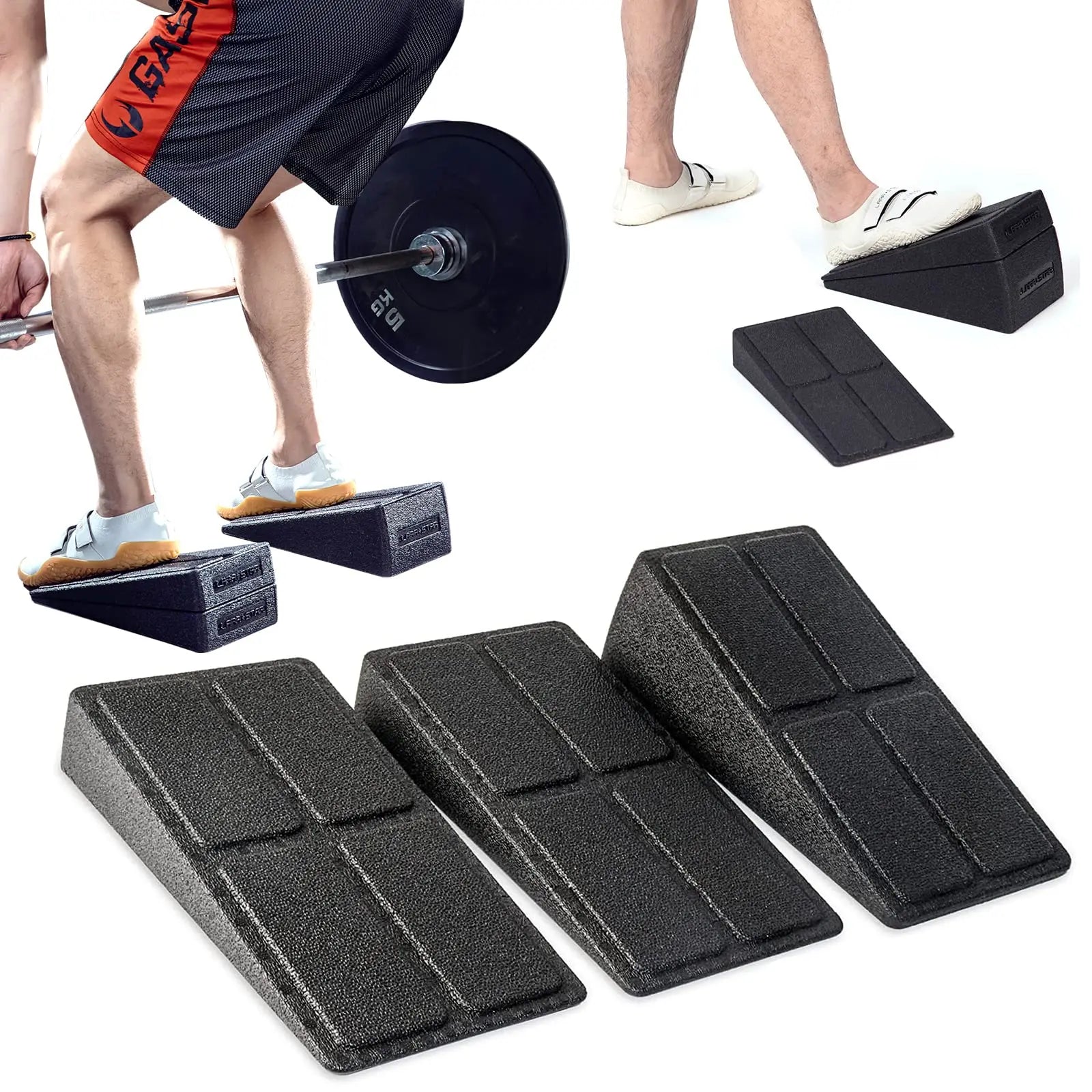
Best for: lifters, runners, and anyone who sits all day. Skip if: you have an acute ankle injury. Get it assessed first.
Leg Stretching Machines and Body Stretchers
Leg stretching machines and body stretchers use frames, pulleys, or levers to hold a stretch for you. They're the priciest category and the one most often bought too early.
Machines take up floor space and generally cost more than the simpler tools covered here.
Buy one when you've already built the habit and you know exactly which range you want to train. Not before.
Stretching Equipment for Back and Shoulders
Shoulder and upper-back stiffness responds best to controlled pulling and opening, not to force. Two tools do most of the work here, but the right choice depends on whether your limit is reach, strength, or joint restriction.
A shoulder pulley or door-anchored strap system lets you work overhead range by pulling with one arm while the other follows.
Watch out: never force an overhead stretch into sharp pain or numbness down the arm. That's a signal to stop and get it looked at, not to push harder. If you have a history of shoulder instability or impingement, consult a clinician before starting a stretching routine.
When choosing between a pulley and a strap, consider space and budget. For a detailed comparison of materials and adjustability, see our guide to shoulder mobility tools.
Consistency matters more than the tool itself.
Yoga Stretching Equipment: Blocks, Mats, and Straps
Yoga stretching equipment is the most forgiving entry point into home flexibility work. Blocks, mats, and straps are inexpensive, stack small, and cover a huge range of poses.
A mat gives grip and a defined surface; cork and dense rubber hold better than thin foam when hands get sweaty. Blocks bring the floor closer when hamstrings or hips won't yet reach it, letting you hold a pose with good alignment instead of collapsing into it.
Straps extend your reach in poses where hands don't meet feet. Our six-rope yoga stretch strap adjusts tension and is suited to opening the shoulders and upper back.
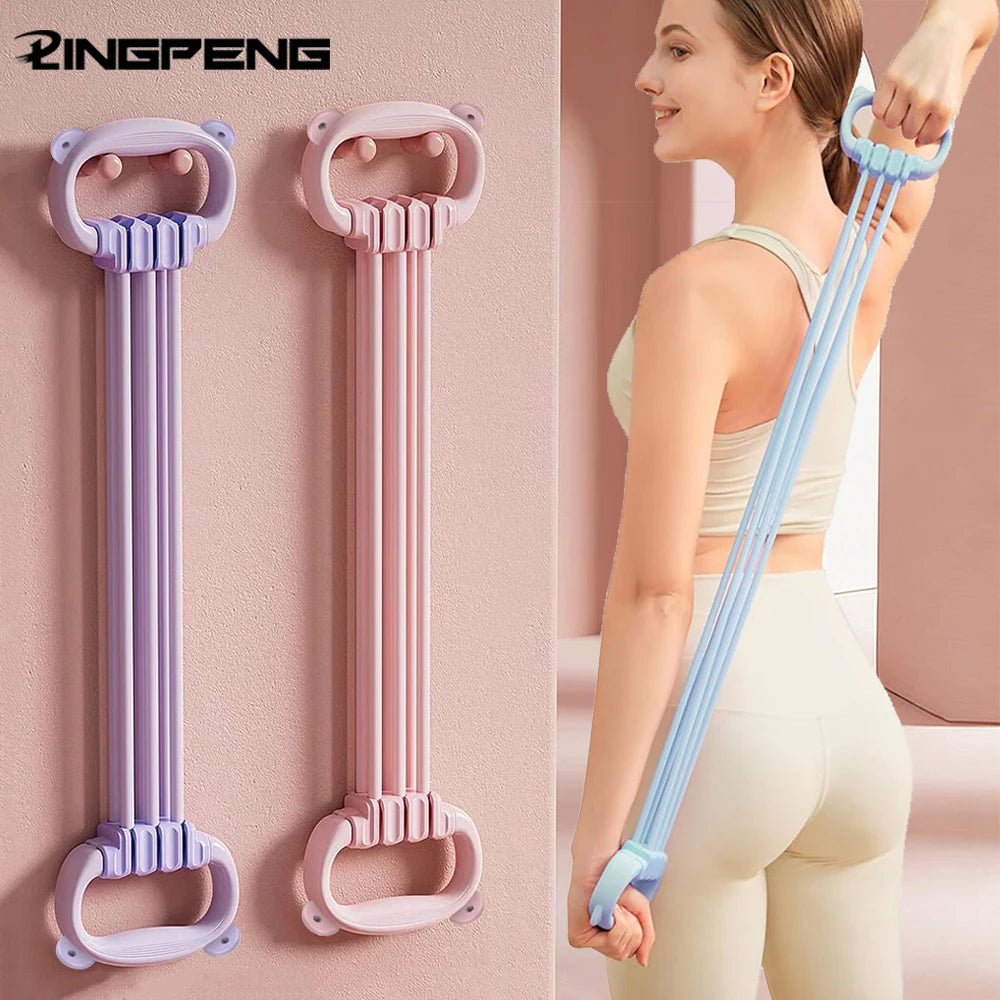
A simple starter set: one mat, two blocks, one strap. That's enough for months of progress.
Build Your Starter Kit in the Right Order
Buy in the order your body will notice the difference. This sequence prioritizes versatility and a low learning curve so you avoid unnecessary purchases.
Step 1: Identify your main restriction. Can't reach your feet in a forward fold? A stretching strap is your first buy. Muscle tension limiting movement?
Step 2: Add tools that complement, not duplicate. A strap extends reach; a foam roller reduces tension. Together they handle most flexibility needs.
Step 4: Factor in storage and portability. In a small apartment, prioritize tools that fit in a drawer or corner.
Step 5: Check materials and durability. Look for straps with comfortable handles, and slant boards with non-slip surfaces. Our adjustable hamstring and flex strap covers shoulders, back, hips, and thighs in one tool.
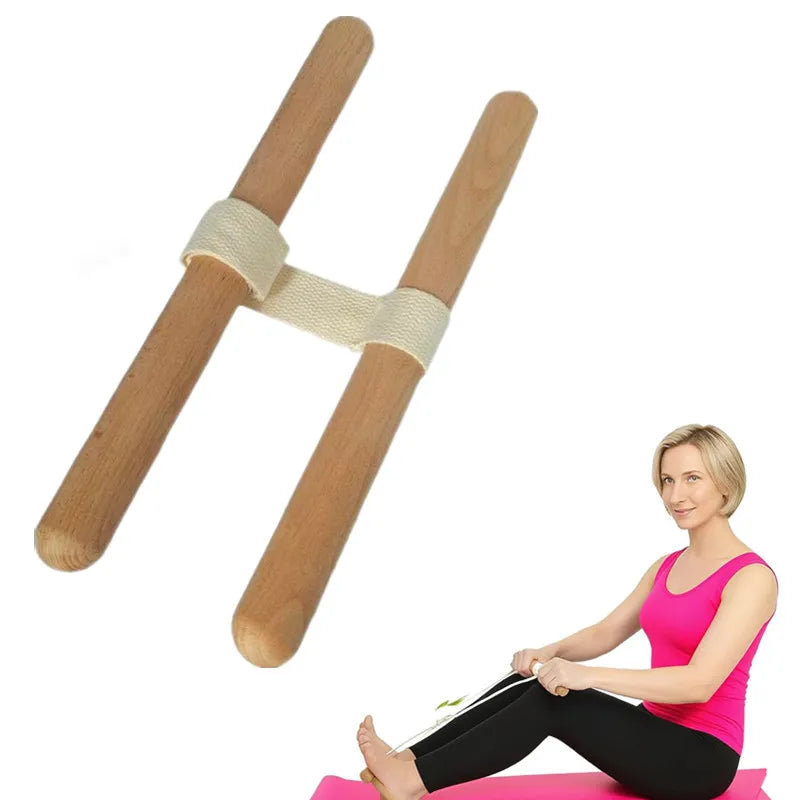
Consistency matters more than equipment. Ten minutes most days is a practical routine.
Here is the buying order the article recommends, matched to the restriction each tool addresses.
| Step | Tool to buy | What it addresses |
|---|---|---|
| 1 | Stretching strap | Can't reach feet in a forward fold; general stiffness |
| 1 | Foam roller | Muscle tension limiting movement |
| 1 | Slant board or wedge | Calf tightness restricting squat or stride |
| 2 | Strap plus foam roller | Reach and tension together, most flexibility needs |
| 2 | Yoga blocks and mat | Optional if you already have carpeted space |
| 3 | Leg stretching machine or body stretcher | Only after several months of consistent stretching |
| 4 | Strap, bands, travel foam roller | Store easily in a small apartment |
| 5 | Straps with comfortable handles, non-slip slant boards | Materials and durability |
Most people don't lack motivation. They lack a system that makes recovery easy to repeat, especially when training is inconsistent or they're on the road.
Frequently Asked Questions
What is the best stretching equipment I can use at home?
Start with a stretching strap and a foam roller, then add a slant board if calf or leg flexibility is your priority. A strap costs little and lets you hold stretches longer without straining to reach, while a roller handles muscle tension before you stretch. From there, add equipment that targets your tightest area. Buying in that order keeps the total spend low and means every tool earns its place in your routine.
How do I choose stretching equipment for leg flexibility?
Match the tool to the muscle. For calves and ankles, an adjustable slant board with several tilt positions lets you progress gradually from mild to steep. For hamstrings, a strap with a foot loop, such as the Hamstring Stretcher Adjustable Flex Strap, lets you pull the leg toward you while keeping the knee straight. Squat wedges work well for ankle mobility before lifting. Pick one tool per problem area rather than buying several that overlap.
Can stretching equipment help improve back flexibility?
Yes, but the right tools matter. A long strap or a multi-loop shoulder strap helps open the chest and reach the upper back, while a foam roller along the mid-back can ease muscle tension that limits rotation. A shoulder wheel or ladder and pulley, where available, adds controlled range of motion work. Move slowly, stay within a pain-free range, and stop if you feel sharp pain or numbness.
What should I look for in a home stretching machine?
Check four things: adjustable settings so you can progress gradually, a stable base that will not slide on your floor, a compact design if space is tight, and a build quality that matches how often you train. Leg stretching machines and body stretchers take up more room than straps or boards, so measure your space first. If you are unsure, start with a strap or slant board and upgrade once the habit sticks.
