


7 Red Light Therapy Safety Rules for Injury Recovery

Last Updated: October 25, 2026
Quick Summary
Red light therapy is safe for most injuries when you control distance, duration, and skin condition. Most people tolerate it well, with only mild, short-lived side effects like warmth or slight redness. Avoid it on broken, blistered, or infected skin, and get a diagnosis first for serious injuries like fractures or torn ligaments.
- Start with 5 to 10 minutes per area, three to five times a week, and never exceed your device's stated maximum.
- Skip broken, blistered, or infected skin, and remove metal jewelry near the treatment area.
- Avoid treating over acutely swollen, hot areas in the first 24 to 48 hours without clinician guidance.
- Get clinician approval first if you take photosensitizing medications, are pregnant, or have reduced skin sensation.
- Stop and seek medical advice for burns, blisters, worsening swelling, or no improvement after several weeks.
Table of Contents
- How Red Light Therapy Works on Injured Tissue
- Red Light Therapy Side Effects You Should Expect
- Red Light Therapy Safety Precautions Before Your First Session
- Red Light Therapy Treatment Duration: How Long Is Too Long
- Red Light Therapy for Torn Ligaments and Serious Injuries
- Red Light vs Near-Infrared vs Heat Lamps: What You Are Actually Buying
- Red Flags That Mean Stop and See a Professional
- Building Your At-Home Recovery Setup with Vitalyns
- Frequently Asked Questions
How Red Light Therapy Works on Injured Tissue
Red light therapy is a non-invasive treatment that uses specific wavelengths of red and near-infrared light to support tissue repair.
At Vitalyns, we build recovery gear around one simple idea: the body does its best work after effort. Light therapy fits that model.
Here is the short version. Photobiomodulation, the technical name for this process, describes how light exposure interacts with cells to support a healing response. The proposed chain looks like this:
- Light reaches the skin and underlying tissue
- Cells absorb the energy and support ATP production
- Better cellular energy supports tissue repair and circulation
That is the theory. The honest caveat is that evidence quality varies by injury type, and results differ from person to person. PubMed research on photobiomodulation is a good place to read primary studies rather than marketing pages.
If you want the deeper evidence picture, our guide on whether red light therapy actually works breaks down what the research does and does not show.
Red Light Therapy Side Effects You Should Expect
Most people tolerate red light therapy well. The most common side effects are mild and short-lived.
Typical red light therapy side effects include:
- Warmth or slight redness at the treatment site
- Mild tingling during or after a session
- Temporary skin sensitivity
These usually fade within hours. The bigger risk is not the light itself but misuse: too long, too close, or on broken skin.
Watch out: using a device at full power directly against the skin for an extended session can cause a thermal burn.
Red Light Therapy Safety Precautions Before Your First Session
Red light therapy safety precautions come down to four controls: distance, duration, coverage, and skin condition. Get those right and the risk drops sharply. But the checklist changes depending on what you are treating, so treat the injury category as a fifth control.
Use this checklist before your first session:
- Read the device manual and note the recommended distance
- Set a timer rather than guessing
- Test on a small area first
A common mistake is treating longer as better. It is not. More exposure past a point adds risk without adding benefit.
Injury-Specific Safety Considerations
Most guides treat "injury" as one category. It is not, and the precautions differ:
- Sprains and strains (ligaments and muscles): Generally the lowest-risk category for at-home use. Avoid treating over an area that is acutely swollen and hot in the first 24-48 hours without clinician guidance, because adding heat to a fresh inflammatory response can increase discomfort. Once swelling is settling, short sessions are usually well tolerated.
- Fractures: Do not use a device over a suspected or confirmed fracture before it has been assessed and stabilized. Light therapy is sometimes used in clinical settings as an adjunct after immobilization, but at-home use over an unstable fracture is not appropriate without clearance.
- Burns: Skip entirely on burned or blistered skin. The tissue is already compromised, and added heat or pressure can worsen damage.
Contraindications and Medication Interactions
Some people should not use light therapy without medical clearance, and a few should skip it.
Avoid red light therapy, or get clinician approval first, if you:
- Take photosensitizing medications. Common examples include certain antibiotics (such as tetracyclines and fluoroquinolones), isotretinoin, some diuretics, and certain antidepressants. Photosensitivity varies by drug and dose, so check the medication leaflet or ask a pharmacist.
- Are pregnant. There is limited human safety data for photobiomodulation during pregnancy. Many clinicians advise avoiding unnecessary exposure, especially over the abdomen and pelvis, unless cleared.
- Have active skin cancer or a suspicious lesion in the treatment area.
If any of these apply, talk to a trained medical professional first. This is especially true for anyone managing a diagnosed condition or taking multiple medications.
For a first session, our recommendation is simple: start below the maximum setting and stay under the device's suggested time. If you are choosing a device, the 54W red light therapy lamp for face and joints runs 660nm and 850nm with an adjustable stand, which makes distance control easier.

Red Light Therapy Treatment Duration: How Long Is Too Long
Most at-home sessions run between 5 and 20 minutes per area. Anything past the device's stated maximum is too long.
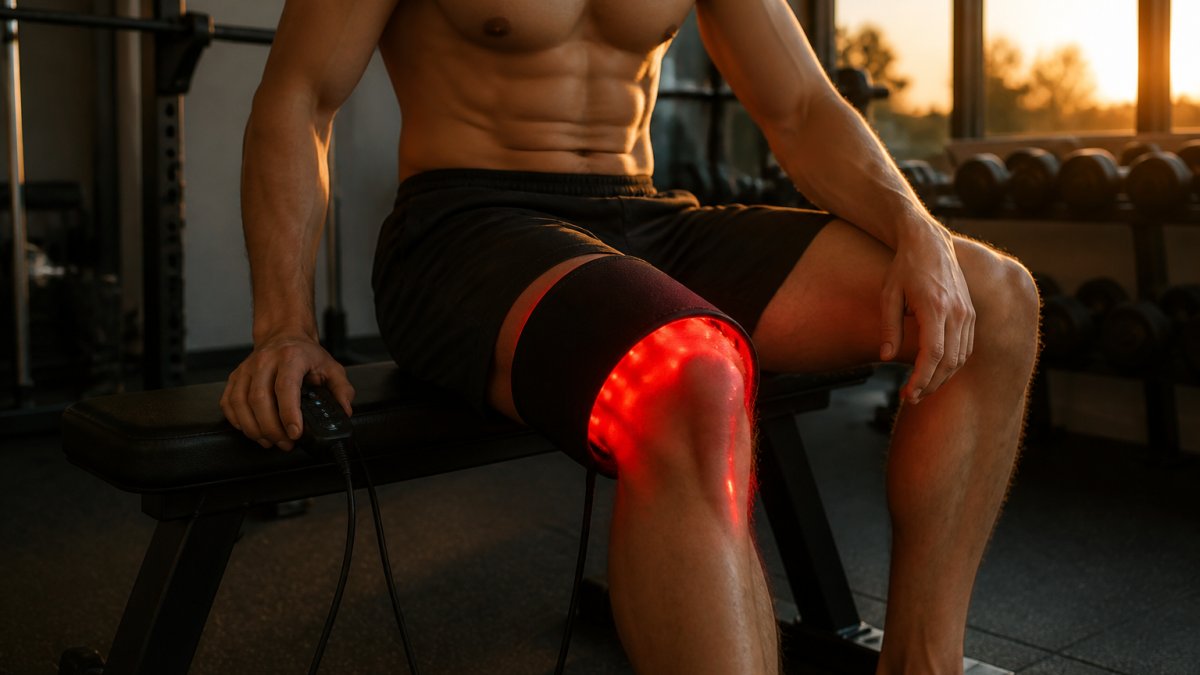
The right red light therapy treatment duration depends on three things:
| Factor | What to Check | Practical Rule |
|---|---|---|
| Device power | Manual's max time | Never exceed it |
| Distance | Recommended gap from skin | Closer is not better |
| Area size | Small joint vs large muscle | Shorter for thin skin |
As a starting point, try 5 to 10 minutes per area, three to five times a week. Many devices build in a 30-minute auto shutoff for safety, including our 120 LED waist and shoulder belt.
Red Light Therapy Device Cold Sore Canker Sore Treatment Infrared Light Therapy →
Stop if the skin feels hot rather than warm. Redness that lasts more than a few hours is a sign to back off.
Red Light Therapy for Torn Ligaments and Serious Injuries
Red light therapy is not a substitute for proper care of a torn ligament. It may support recovery alongside physiotherapy, but it does not repair a structural tear on its own.
Here is what most guides miss. A torn ligament needs assessment, loading guidance, and time. Light therapy sits on top of that plan, not in place of it. The evidence for photobiomodulation in ligament injuries is mostly small human studies and animal work, with mixed results depending on wavelength, dose, and how soon after injury treatment starts.
What the Evidence Actually Supports
- Pain and swelling: The most consistent human findings are for reduced pain and swelling in musculoskeletal conditions, including knee osteoarthritis and some soft-tissue injuries. Effects are usually modest.
- Tissue repair: Laboratory and animal studies suggest light exposure can support collagen synthesis and cellular repair, but human evidence for accelerating ligament healing specifically is limited.
- Return to activity: No strong evidence that light therapy speeds return to sport after a ligament tear. Rehab loading and time remain the main drivers.
A common pattern in the research is that dose matters: too little does nothing, and too much can blunt the response. That is why device instructions and consistency matter more than maximum power.
Injury-Specific Rules for Serious Injuries
For serious injuries, follow these rules:
- Get a diagnosis before you treat. A torn ligament, a fracture, and a bad sprain can feel similar. Imaging or a clinical exam determines what you are actually dealing with.
- Ask your physiotherapist or doctor about light therapy and whether it fits your stage of recovery.
- Do not use light therapy as a reason to skip rehab. Loading, strengthening, and proprioception work are what restore function.
For larger areas like the back and shoulder, a body-area device makes coverage easier. Our red light therapy heating pad for back and shoulder pain uses 660nm and 850nm LEDs with adjustable modes and a timer.

Red Light vs Near-Infrared vs Heat Lamps: What You Are Actually Buying
These three are not the same product, and the difference matters for injury recovery.
- Red light (around 660nm): visible red, acts closer to the skin surface
- Near-infrared (around 850nm): invisible, penetrates deeper into tissue
- Heat lamps: deliver warmth, not targeted light therapy
Heat lamps feel good on tight muscles. They do not offer the same wavelength-specific exposure.
Our 660nm and 850nm waist belt combines both wavelengths in one unit, which is what you want if you are comparing specs and want a concrete example to judge others against.
Best for: targeted joint and muscle work with known wavelengths. Skip if: you only want general warmth for relaxation.
Red Flags That Mean Stop and See a Professional
Stop using red light therapy and get medical advice if you notice any of these:
- A burn, blister, or broken skin at the treatment site
- Pain that increases during or after sessions
- New or worsening swelling
The last one matters. Red light therapy is a support tool. If an injury is not improving, the problem is likely the diagnosis or the rehab plan, not your device settings.
Building Your At-Home Recovery Setup with Vitalyns
A practical setup beats a big collection of gadgets. Start with one device that fits your main problem area, then add only what you will actually use.
Our advice for a first setup:
- Pick your most common issue: knee, shoulder, back, or small joints
- Choose a device with stated wavelengths and a timer
- Set a fixed schedule, three to five sessions a week
- Track pain and mobility weekly
- Add a second device only when you hit a clear limit
For small joints like knees, ankles, hands, and feet, the handheld red light therapy wand covers targeted spots that larger pads cannot reach.

Red light therapy is safe for most injuries when you control distance, duration, and skin condition.
Frequently Asked Questions
Is red light therapy safe to use on an acute injury?
Use caution in the first 48 to 72 hours. Early on, the priority is standard injury care: rest, ice, compression and elevation, plus a professional assessment if swelling is severe or you cannot bear weight. Light therapy is non-invasive and painless, but applying heat or light to freshly damaged tissue can add to swelling. Once the acute phase settles and a clinician has cleared you, red light therapy can support tissue repair and circulation. Stop immediately if a session increases pain or swelling.
Can you overdo red light therapy on an injury?
Yes. More is not better with photobiomodulation. Overexposure raises the risk of skin irritation, redness and, with higher-powered devices, thermal injury. Keep sessions short, follow the device's timer, and leave at least a few hours between sessions on the same area. A common practical schedule is three to five sessions per week at 10 to 20 minutes each. Track pain and swelling after every session; if either climbs, cut the duration or skip a day.
What are the side effects of red light therapy?
Most reported effects are mild and short-lived: temporary redness, warmth, and slight skin tightness around the treated area. Burns are rare but possible when a device is held too close or used far longer than directed. Eye exposure is the other concern, so wear the supplied goggles during face or upper-body sessions. Anyone taking photosensitizing medication, pregnant, or with a history of skin cancer should speak to a doctor before starting.
Should red light therapy replace medical treatment for an injury?
No. Red light therapy is a support tool, not a diagnosis or a substitute for rehab. Torn ligaments, suspected fractures, and joint instability need proper assessment, imaging where indicated, and a structured loading program from a physiotherapist or sports doctor. Use light therapy alongside that plan to support circulation, pain relief and tissue repair. If you have not had the injury examined, book that appointment first, then build your at-home protocol around the clinician's advice.
Recovery is not passive. It is a system you build, and the right gear makes it repeatable. Vitalyns offers five distinct collections designed to help you reset your body, improve mobility, and support muscle recovery between sessions. Explore the red light therapy range and find the device that matches your training load. Get started with Vitalyns and give your body the recovery routine it has been missing.
