


Why Muscles Feel Sore Days Later: DOMS Explained

Table of Contents
- What Delayed-Onset Muscle Soreness (DOMS) Is and Why It Happens Days Later
- How Long Does DOMS Last and When Does Peak Soreness Occur
- How to Reduce Muscle Soreness After a Workout
- Working Out With Sore Muscles: When It's Safe and When to Rest
- DOMS vs. Injury: How to Tell the Difference
- Preventing DOMS Through Smart Training Adjustments
- Frequently Asked Questions
Last Updated: October 11, 2026
What Delayed-Onset Muscle Soreness (DOMS) Is and Why It Happens Days Later
Delayed-onset muscle soreness, commonly called DOMS, is the muscle pain and stiffness that appears one to three days after intense exercise (pubmed.ncbi.nlm.nih.gov).
DOMS happens because of microscopic damage to muscle fibers during unaccustomed or intense physical activity. When you perform movements your body isn't used to, or push harder than usual, you create tiny tears in the muscle tissue. This isn't injury in the dangerous sense.
The role of eccentric exercise and microscopic muscle damage
Eccentric exercise, where your muscles lengthen under tension, triggers the most soreness. Think of lowering a heavy weight slowly or running downhill. These movements create more muscle fiber disruption than concentric exercise (where muscles shorten under load).
The damage itself isn't what causes pain. Rather, it's your body's inflammatory response to that damage. White blood cells flood the area, fluid accumulates between muscle fibers, and nerve endings become more sensitive. This cascade of events creates the dull aching sensation you feel one to three days after your workout.
How inflammation and fluid accumulation create tenderness
Inflammation serves a purpose. It brings nutrients and growth factors to repair the damaged fibers. However, the swelling and fluid buildup compress nerve endings, which increases sensitivity. You'll notice the soreness most when you move the affected muscles or apply pressure to them.
The tenderness typically feels like a dull, heavy ache rather than sharp pain. Your muscles may feel stiff when you first wake up or after sitting for a while. This stiffness decreases as you move around and get blood flowing back to the area.
| Recovery Stage | Timeline | Typical Sensation |
|---|---|---|
| Immediate soreness | During/right after exercise | Sharp, acute feeling |
| Onset of DOMS | 12-24 hours post-exercise | Mild discomfort begins |
| Peak soreness | 24-48 hours post-exercise | Maximum tenderness and stiffness |
| Resolution phase | 72+ hours post-exercise | Gradual reduction in pain |
How Long Does DOMS Last and When Does Peak Soreness Occur
Muscle soreness days later typically peaks around 24 to 48 hours after your workout and gradually subsides over the next few days. For most people, soreness resolves completely within three to five days.
The severity of soreness doesn't indicate how much muscle you've built. Mild soreness can mean your body adapted efficiently. Extreme soreness might mean you pushed too hard or returned to exercise after a long break. Both scenarios produce muscle growth, but the pain experience varies.
The 24-48 hour window and typical recovery timeline
The peak soreness window of 24 to 48 hours is when most people feel the worst. This is when inflammation peaks and fluid accumulation is highest. After 48 hours, your body begins clearing the fluid and completing initial repairs. By day three or four, most people notice significant improvement.
Here's what a typical recovery looks like:
- Day 0-12 hours: Minimal soreness; you might not feel much yet
- Day 1: Soreness becomes noticeable, especially with movement
- Day 1-2: Peak soreness; muscles feel stiff and tender
- Day 3: Noticeable improvement; soreness decreases
- Day 4-5: Most soreness resolves; you're back to normal
Some athletes report lingering mild soreness on day five or six, especially after very intense training. This doesn't mean something is wrong. It just means your body is still completing the repair process.
Factors that influence soreness duration
Several factors determine how long your soreness lasts. Age plays a role, older athletes sometimes experience longer soreness than younger ones, though this varies individually. Your training experience matters too.
The type of exercise affects duration. New movements cause more soreness than familiar ones. High-volume training (many sets and reps) typically produces more soreness than heavy single-rep efforts. Your recovery practices also influence how quickly soreness resolves. Active movement, proper nutrition, and adequate sleep all speed recovery.
How to Reduce Muscle Soreness After a Workout
Managing muscle soreness days later doesn't require expensive interventions. Practical recovery strategies reduce discomfort and support faster adaptation. The most effective approaches combine immediate post-workout care with ongoing movement and targeted techniques.
Cold therapy and compression for immediate relief
Cold therapy reduces inflammation and numbs pain. The RecoveryTherm Cube Hot Cold Therapy Machine provides adjustable cold temperatures (5-10-15°C) with three flow rate settings, making it easy to target sore areas consistently.

Compression works alongside cold therapy. The Cold Recovery Device Ice Water Circulating System with Compression Pad combines both: the waterproof EVA lining holds cold water while the compression pad applies pressure.

Apply cold therapy for 15 to 20 minutes, several times in the first 24 hours. This reduces swelling without numbing the area so much that you lose all sensation.
Active recovery and gentle movement strategies
Moving sore muscles actually reduces soreness faster than complete rest. Gentle movement increases blood flow, which clears inflammatory fluid and delivers nutrients for repair. This doesn't mean intense exercise.
Aim for 10 to 20 minutes of gentle activity on days when you're most sore. The goal is to move without adding new muscle damage. Avoid high-intensity intervals or heavy lifting.
Active recovery also prevents stiffness. Sore muscles feel tighter when you're sedentary. Moving them regularly maintains flexibility and reduces the heavy, stiff sensation.
Stretching, foam rolling, and massage techniques
Gentle stretching helps reduce muscle tension. Hold stretches for 20 to 30 seconds without bouncing. Focus on the sore areas with static stretches that feel comfortable, not painful.
Foam rolling provides self-massage that breaks up fluid accumulation and trigger points. The 45cm Yoga Foam Roller targets larger muscle groups. Roll slowly over sore areas for 30 to 60 seconds per muscle group.
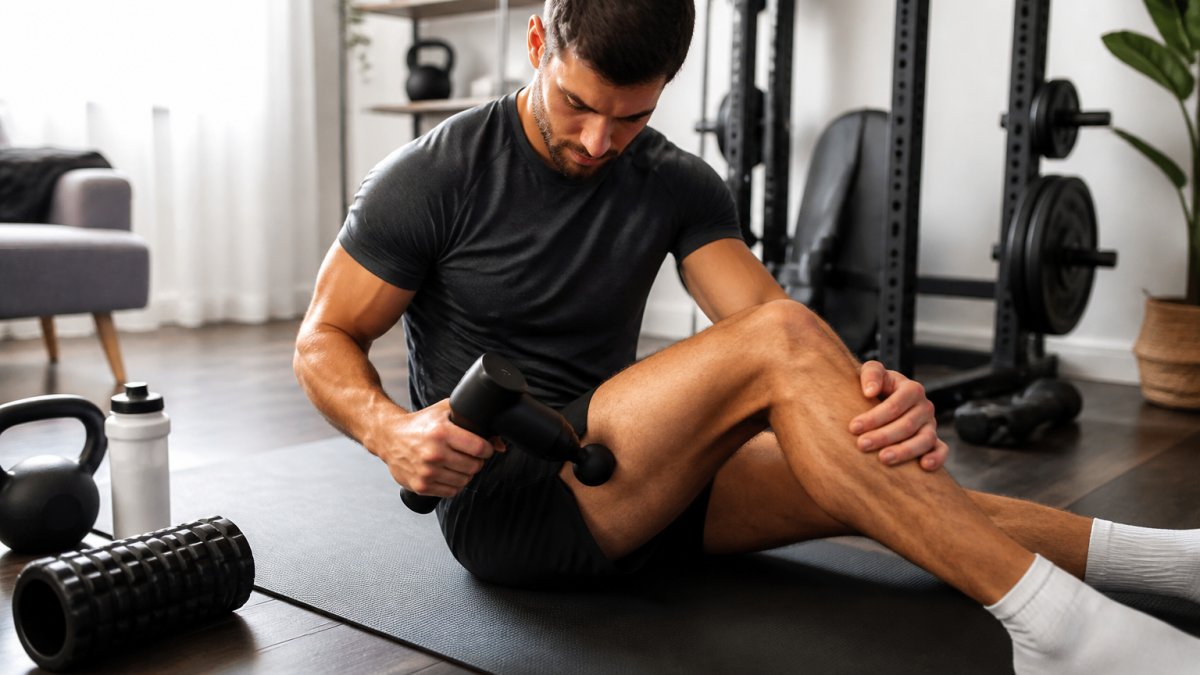
Percussion massage, using a massage gun, provides deeper tissue stimulation. The Portable Massage Gun with 19 modes and 4 speeds targets sore muscles effectively.

Working Out With Sore Muscles: When It's Safe and When to Rest
Soreness itself doesn't mean you shouldn't exercise. Many athletes train through mild to moderate DOMS successfully. The key is matching your workout intensity to your recovery status. Training with sore muscles is safe as long as you adjust volume and intensity appropriately.
RecoveryTherm Cube Hot Cold Therapy Machine for Knee Shoulder Leg Arm →
Light activity versus intense training during soreness
Light activity accelerates recovery and is safe even on peak soreness days. Gentle movement, stretching, and low-intensity cardio all support adaptation without adding new damage. These activities don't stress already-fatigued muscles.
Intense training is different. Hitting the same muscle groups hard while they're still recovering can extend soreness and delay adaptation.
The rule of thumb: if soreness prevents you from using full range of motion or proper form, skip heavy training of that muscle group. Use a lighter session instead.
How to adjust volume and intensity to prevent aggravation
Volume means total sets and reps. Intensity means how heavy or hard you work. When training sore muscles, reduce both temporarily.
This approach keeps you active and maintains training consistency without extending recovery time. You're training the movement pattern without creating new damage on top of existing soreness.
Rotate muscle groups strategically. If your legs are sore, train upper body. If your back is sore, focus on legs and arms. This allows continuous training while letting sore areas recover.
DOMS vs. Injury: How to Tell the Difference
Not all muscle pain after exercise is DOMS. Sharp pain, pain that worsens over days rather than improving, or pain localized to a specific point may signal injury. Understanding the difference prevents training through something that needs rest.
Red flags that signal you need urgent care
Seek medical attention if you experience:
- Sharp, stabbing pain (not dull ache)
- Swelling that worsens after day two
- Pain that increases with each passing day
- Inability to move the joint or muscle at all
- Bruising that appears or spreads
- Numbness or tingling in the affected area
- Pain accompanied by instability or feeling like something "gave way"
These signs suggest strain, tear, or other injury requiring professional evaluation. DOMS is uncomfortable but manageable. Injury needs assessment and possibly treatment.
DOMS pain is typically bilateral (affects both sides equally if you worked both legs, for example) and improves with movement. Injury pain is often one-sided and worsens with specific movements. DOMS peaks around day two and improves consistently after. Injury pain may plateau or worsen.
Preventing DOMS Through Smart Training Adjustments
The most effective DOMS prevention is gradual progression. Your body adapts to training stress over time. Sudden, dramatic increases in volume or intensity trigger excessive soreness. Smart training adjusts intensity and volume progressively, allowing adaptation without overwhelming soreness.
Progressive overload and gradual intensity increases
Progressive overload means gradually increasing training demands. Add weight, reps, or sets slowly over weeks.
If you're returning to training after a break, start conservatively. Your muscles have lost some adaptation. Begin at 50 to 60 percent of your previous intensity and volume.
New exercises trigger more soreness than familiar ones. When learning a new movement, use lighter weight and fewer reps initially. Spend two to three weeks building familiarity before increasing intensity.
Warm-up protocols and exercise selection
A proper warm-up prepares muscles for work and reduces soreness risk.
Exercise selection matters too. Eccentric-heavy training (lots of lowering movements) causes more soreness. If you're new to training or returning from a break, emphasize concentric movements initially.
Variety in your training also helps. Repeating the exact same workout repeatedly teaches your body to handle that specific stimulus efficiently.
Muscle soreness days later is a normal part of training. Understanding what causes it and how to manage it helps you stay consistent with your workouts and recover faster between sessions.
Vitalyns provides the recovery equipment you need to manage post-workout soreness effectively. From cold therapy machines to massage guns and foam rollers, our comprehensive recovery system supports faster adaptation and better mobility. Explore our collections and find the tools that match your training style and recovery needs.
Frequently Asked Questions
Why do my muscles feel sore days after a workout?
Muscle soreness days after exercise, known as DOMS (delayed-onset muscle soreness), occurs due to microscopic damage to muscle fibers during unaccustomed or intense physical activity. When you perform new exercises or increase workout intensity, eccentric muscle contractions (lengthening under tension) cause micro-tearing in muscle fibers. This triggers an inflammatory response as your body repairs the damage, leading to tenderness and stiffness that typically peaks 24-48 hours post-exercise.
How long does DOMS last, and when should soreness peak?
DOMS typically appears one or two days after exercise and peaks around 48 hours, though it can last 3-7 days depending on exercise intensity and your training experience. Beginners and those performing new exercises experience longer soreness duration. Most recovery occurs within 5-7 days as muscle inflammation subsides and your body completes the repair process. Soreness gradually decreases as your muscles adapt to the training stimulus.
How can I reduce muscle soreness after a workout?
Effective strategies include cold therapy and compression within the first 24 hours to reduce inflammation, gentle movement and stretching to improve circulation, and foam rolling or massage to alleviate tension. Tools like massage guns and cold recovery devices accelerate blood flow and reduce muscle tension. Rest and adequate protein intake support muscle repair. Combining these methods, rather than relying on one, produces the best results for managing post-exercise soreness.
How do I know if muscle soreness is DOMS or an actual injury?
DOMS is symmetrical (affects both sides equally), develops gradually over 24-48 hours, and improves with gentle movement and time. Injuries typically cause sharp, localized pain that worsens with movement, swelling that appears suddenly, bruising, or loss of function. Red flags requiring medical attention include severe pain limiting daily activities, inability to bear weight, persistent swelling beyond 48 hours, or pain that worsens rather than improves over days. When in doubt, consult a healthcare provider.