


Massage Gun vs Foam Roller for Mobility: Which Wins?

Table of Contents
- Massage Gun vs Foam Roller: The Core Differences
- Massage Gun vs Foam Roller Before Workout: Which Primes You Better?
- Foam Rolling vs Massage Gun for Recovery: Soreness and Recovery Time
- Mobility Outcomes by Joint and Movement
- How Long to Foam Roll Each Muscle
- How to Use a Massage Gun Safely
- When Neither Tool Is the Right Answer
- Frequently Asked Questions
Last Updated: October 18, 2026
Massage Gun vs Foam Roller: The Core Differences
The massage gun vs foam roller for mobility debate comes down to one distinction: a foam roller uses your bodyweight across a broad surface, while a massage gun delivers percussive pressure into a small, targeted spot.

How Each Tool Delivers Pressure
A foam roller spreads force across a wide strip of tissue. You control intensity by shifting weight, so pressure builds gradually and covers several muscle groups at once. A massage gun concentrates force into a head roughly the size of a coin, pulsing at speed rather than pressing with weight. Deep pressure from a roller feels like a slow squeeze; percussion feels like a rapid tap.
Treatment Area and Precision
Precision favors the gun. A massage gun reaches trigger points in the calf, the upper trap, or the sole of the foot where a roller simply cannot fit. The roller wins on coverage: quads, lats, and hamstrings get treated in one pass. If your goal is a larger treatment area before a session, roll. If you need targeted massage on one stubborn knot, reach for percussion.
| Feature | Foam Roller | Massage Gun |
|---|---|---|
| Pressure type | Bodyweight, broad | Percussive, focused |
| Treatment area | Large muscle groups | Localized spots |
| Precision | Low | High |
| Portability | Bulky | Pocket-sized options |
| Best for | Coverage, warm-up | Trigger points, tension |
| Cost | Lower entry point | Varies by model |
Massage Gun vs Foam Roller Before Workout: Which Primes You Better?
A foam roller primes you better before training when the goal is general range of motion across big muscle groups. A massage gun works better for waking up one specific area that feels locked. But the reason both belong in a warm-up is mechanical, not mystical: brief rolling or percussion raises local tissue temperature and blood flow and temporarily reduces stiffness, which is why most practitioners recommend keeping pre-exercise use short and light rather than long and deep.

Why Timing and Intensity Matter More Than the Tool
Pre-workout self-massage is a priming tool, not a stretching session. A common pattern among strength coaches is 30 to 90 seconds per muscle group at low to moderate pressure, finished 5 to 10 minutes before the first working set. Go longer or harder and you risk the opposite effect: heavy pressure before a max effort can leave tissue sensitive and temporarily reduce force output.
Warm-Up Protocols by Training Type
Different sessions call for different prep. Here is how we would sequence it:
- Strength training (squat or deadlift day): 60-90 seconds rolling each quad and glute, then 30 seconds of light percussion on the hip flexors. Finish with 2-3 bodyweight squats to confirm the range feels usable.
- Cycling: 45 seconds per quad and calf on the roller, plus a slow pass over the thoracic spine to open the upper back before the bars.
- CrossFit or HIIT: 30 seconds of percussion on the calves and shoulders, then move straight into dynamic drills, the gun is faster here because you can hit multiple spots without repositioning on the floor.
- Running: roll the calves and IT band briefly, then gun the arches of the feet for 20-30 seconds per side. Foot and ankle prep pays off most in the first mile.
What Not to Do Before You Train
Avoid aggressive rolling or high-amplitude percussion on a cold muscle you are about to load heavily. A short, light pass is enough to feel a difference; a long, deep session is better saved for recovery. If a joint feels blocked rather than tight, for example, an ankle that will not dorsiflex under load, neither tool fixes that in five minutes, and you should treat it as a mobility project rather than a warm-up problem.
Foam Rolling vs Massage Gun for Recovery: Soreness and Recovery Time
Foam rolling vs massage gun for recovery is not a clean win for either. Both can ease perceived muscle soreness and help you feel looser the next day, and both work best as part of a broader recovery plan that includes sleep and nutrition. What separates them is dosage and reach. A roller lets you cover both legs in a few minutes; a gun lets you drill into the one spot that aches.
What the Evidence Actually Supports, and What It Doesn't
The honest answer is that the research on both tools is promising but limited. Most studies are small and short-term, and they tend to measure how people feel (perceived soreness, perceived looseness) rather than hard performance outcomes. A common pattern in the literature is a modest reduction in delayed-onset muscle soreness (DOMS) and a temporary increase in range of motion after a single session, but the effect is short-lived, typically minutes to a couple of hours.
Short-Term Loosening vs Lasting Mobility
Separate two outcomes that get blurred together:
- Short-term range of motion: a single rolling or percussion session can temporarily increase range of motion, which is why these tools work best right before the movement you want to improve.
- Lasting flexibility: durable gains come from consistent use over weeks combined with active mobility and strength work, not from one long session.
Treat both tools as a repeated habit rather than a one-time fix. If you want a lasting change in, say, squat depth, the tool is the warm-up, the training is the program.
Practical Recovery Dosage
A simple, repeatable recovery routine looks like this:
- Foam roller: 60-90 seconds per large muscle group at slow pace (about one inch per second), pausing 20-30 seconds on tender spots. A full lower-body pass runs 5-10 minutes.
- Massage gun: 1-2 minutes per area at moderate speed, keeping the head moving. Most models include an auto shut-off to prevent overuse; use it as a cue to stop.
- Timing: post-workout or in the evening, when tissue is warm. Keep pressure comfortable, sharp pain is a signal to back off, not push through.
When Recovery Is Not the Real Problem
If soreness persists for more than a few days, worsens with light activity, or comes with swelling or sharp pain, neither tool is the answer. That pattern warrants rest and, if it continues, a professional assessment. Recovery tools support a plan; they do not diagnose or treat an injury.
Portable Massage Gun 19 Mode 4 Speed Personal Handheld Vibrating Massager Deep →
Mobility Outcomes by Joint and Movement
Mobility outcomes vary by joint, and this is where most comparisons stay vague. Ankle mobility responds well to both tools. Hip mobility usually favors the roller for coverage. Thoracic spine mobility needs the roller, since a gun cannot create the extension a cylinder under the upper back can.
Ankle, Hip, and Thoracic Spine Compared
- Ankle: roll the calf for 60 seconds, then gun the soleus and arch for 30 seconds. This supports dorsiflexion for squats and running.
- Hip: roll the quads, glutes, and TFL for 90 seconds total. Use the gun on the hip flexors for 30 seconds.
- Thoracic spine: place the roller under the upper back and extend gently. A massage gun is not suited to this movement.
How Long to Foam Roll Each Muscle
Spend 30 to 90 seconds per muscle group, moving slowly. Longer is not better. For most athletes, a full foam rolling session runs five to ten minutes. Roll at a pace of about one inch per second, pausing on tender spots for 20 to 30 seconds. If a spot feels sharp rather than tight, back off.
| Muscle Group | Time | Pace |
|---|---|---|
| Quads | 60-90 sec | Slow, pause on tight spots |
| Calves | 45-60 sec | One inch per second |
| Glutes | 60 sec per side | Pause 20-30 sec on tender areas |
| Thoracic spine | 60 sec | Gentle extension, no rolling fast |
| IT band | 30-45 sec | Light pressure only |
How to Use a Massage Gun Safely
Keep the gun moving, use light pressure, and stay on muscle rather than bone or joints. Sessions of one to two minutes per area are enough. Many models include an auto shut-off to prevent overuse.
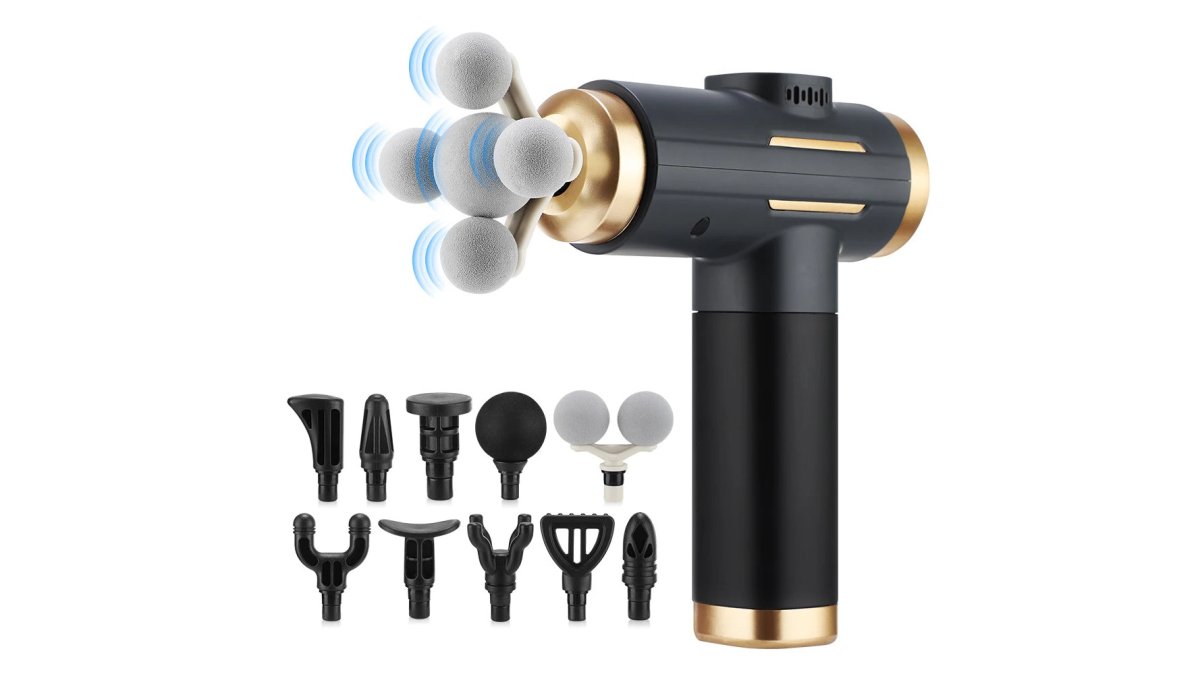
Our Portable Fascial Massage Gun includes an 8 mm amplitude, 11 massage heads, and a 10-minute auto shut-off, which makes it easy to keep sessions short. For travel, the Mini Portable Massage Gun fits in a gym bag and offers six speed modes.
Body Areas to Avoid and Health Conditions to Respect
Skip the front of the neck, the spine itself, the kidneys, and any area with an open wound. If you have a bleeding disorder, are pregnant, or are recovering from a fracture or surgery, check with a clinician before using percussion. Safety by body area matters more than speed.
When Neither Tool Is the Right Answer
Sometimes the tightness you feel is not a soft tissue problem. If range of motion is limited by joint structure, strength deficits, or an injury that has not been assessed, neither a roller nor a gun will fix it. In those cases, the right move is a strength program or a physiotherapy assessment. Recovery tools support a plan; they do not replace one. Our 45cm Foam Roller and Hexagonal EVA Roller cover the broad work, and our Portable Massage Gun handles the targeted spots.

Frequently Asked Questions
Is a massage gun as effective as foam rolling for mobility?
They solve different problems. Foam rolling covers a larger treatment area with broad, sustained pressure, which suits big surfaces like quads, lats, and the thoracic spine. A massage gun delivers localized percussion into a smaller spot, which helps with trigger points and stubborn tension near joints. For general range of motion, most athletes get further by pairing both: roller for the wide sweep, gun for the specific knot. Neither tool replaces strength work or targeted stretching if mobility is the real goal.
Should I use a massage gun or foam roller before a workout?
Use short, light doses of either, then move into dynamic drills. A foam roller works well for two to three passes over the quads, glutes, and upper back to reduce muscle tension before loading. A massage gun suits a quick 30 to 60 second sweep on the calves or hips when you want precision without lying on the floor. Keep intensity low before training; deep, aggressive work belongs after the session, not before it.
How long should I foam roll each muscle?
Roughly 30 to 90 seconds per muscle group is the practical range. Roll slowly enough to feel the tissue release, pausing on tight spots for 10 to 20 seconds rather than racing up and down. For large areas like the quads or back, two to three passes covers it. Longer sessions rarely add benefit and can leave tissue sensitive, so 5 to 10 minutes total across the whole body is a sensible ceiling.
Can you use a massage gun and foam roller on the same day?
Yes, and many athletes do. A common order is foam roller first to open up a broad area, then the massage gun for any remaining tight spots. Keep total time reasonable, around 10 to 15 minutes combined, and avoid hammering the same tissue with both tools back to back at high intensity. If an area feels bruised or sore the next day, cut the volume and pressure.
Which muscles should you not foam roll?
Skip the lower back, the neck, and any area over bone, joints, or a recent injury. The lumbar spine has no padding to absorb roller pressure, and the neck is too vulnerable. For a massage gun, avoid the front of the throat, the spine itself, and any numb, inflamed, or bruised tissue. If you have a diagnosed condition or are rehabbing an injury, clear the routine with your physiotherapist first.
The real challenge is not choosing between a roller and a gun; it is building a routine you will actually repeat. Vitalyns designs recovery and mobility gear for exactly that: tools that reset your body after hard effort, support muscle recovery, and help you move better session after session. Explore the Vitalyns collections and build the routine that keeps you ready for the next challenge.